
Learning Insects Name in English is important for students to improve their vocabulary and gain knowledge about small living creatures found around us. This topic introduces a variety of common insects, such as ant, butterfly, bee, mosquito, spider, and grasshopper, along with their correct names and spellings.
By learning these insect names with examples and pictures, students can easily identify different insects, expand their vocabulary, and communicate more confidently using Insects Name in English.
Insects Name in English
Explore common and interesting insect names in English to improve vocabulary, spelling, and identification skills for students and beginners.
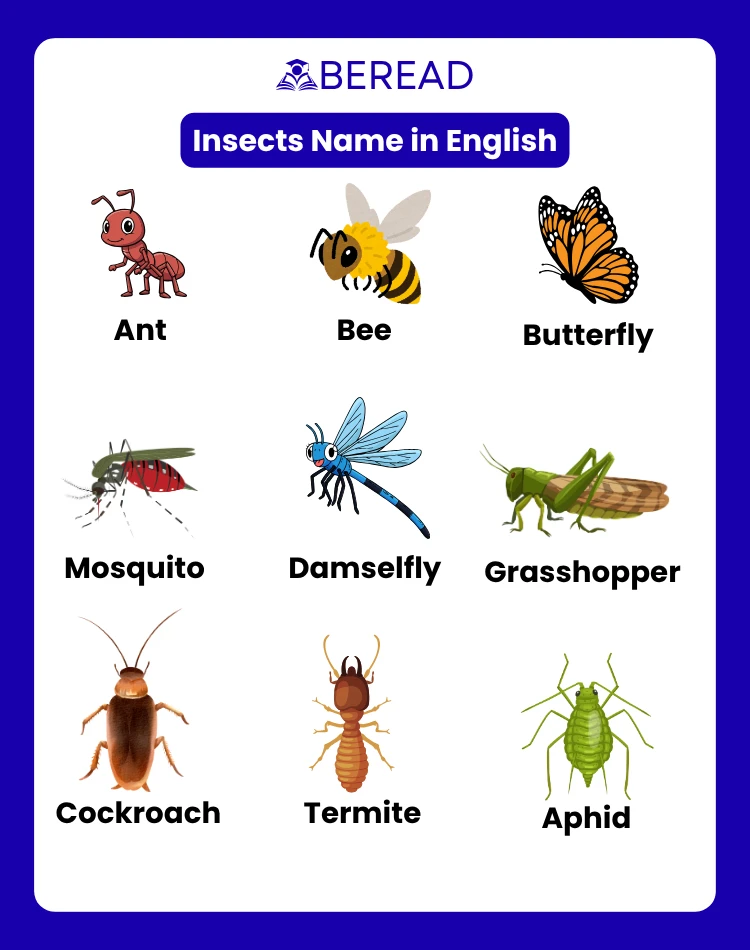
| Ant | Bee | Wasp |
| Hornet | Butterfly | Moth |
| Mosquito | Housefly | Fruit Fly |
| Dragonfly | Damselfly | Grasshopper |
| Cricket | Locust | Cockroach |
| Termite | Beetle | Ladybug |
| Firefly | Weevil | Stag Beetle |
| Dung Beetle | Scarab | June Bug |
| Leaf Beetle | Flea | Louse |
| Bed Bug | Aphid | Cicada |
| Leafhopper | Planthopper | Treehopper |
| Lanternfly | Shield Bug | Stink Bug |
| Assassin Bug | Water Bug | Water Strider |
| Praying Mantis | Stick Insect | Leaf Insect |
| Earwig | Silverfish | Mayfly |
| Stonefly | Caddisfly | Dobsonfly |
| Lacewing | Antlion | Thrips |
| Whitefly | Mealybug | Scale Insect |
| Bark Beetle | Sawfly | Gall Wasp |
| Parasitoid Wasp | Hoverfly | Horsefly |
| Deer Fly | Crane Fly | Gnat |
| Midge | Black Fly | Sand Fly |
| Robber Fly | Blowfly | Botfly |
| Tachinid Fly | Dance Fly | Bee Fly |
| Soldier Fly | Fungus Gnat | Drain Fly |
| Kissing Bug | Milkweed Bug | Boxelder Bug |
| Squash Bug | Seed Bug | Pirate Bug |
| Ambush Bug | Water Scorpion | Backswimmer |
| Water Boatman | Pond Skater | Mole Cricket |
| Katydid | Camel Cricket | Jerusalem Cricket |
| Walking Stick | Lubber | Conehead |
| Shield-backed Katydid | Tree Cricket | Bush Cricket |
| Ground Beetle | Click Beetle | Borer Beetle |
| Longhorn Beetle | Rove Beetle | Blister Beetle |
| Carpet Beetle | Flour Beetle | Mealworm Beetle |
| Darkling Beetle | Leaf Weevil | Rice Weevil |
| Boll Weevil | Giraffe Weevil | Snout Beetle |
| Glowworm | Lightning Bug | Jewel Beetle |
| Tiger Beetle | Whirligig Beetle | Diving Beetle |
| Water Scavenger Beetle | Carrion Beetle | Tortoise Beetle |
| Pill Bug | Springtail | Booklouse |
| Dust Louse | Psocid | Webspinner |
| Zorapteran | Grylloblattid | Mantidfly |
| Snakefly | Alderfly | Fishfly |
| Owlfly | Scorpionfly | Hangingfly |
| Snow Flea | Ice Crawler | Bristletail |
| Jumping Bristletail | Fire Ant | Carpenter Ant |
| Army Ant | Bullet Ant | Leafcutter Ant |
| Weaver Ant | Pharaoh Ant | Ghost Ant |
| Harvester Ant | Crazy Ant | Pavement Ant |
| Honey Bee | Bumblebee | Carpenter Bee |
| Mason Bee | Sweat Bee | Leafcutter Bee |
| Killer Bee | Orchid Bee | Cuckoo Bee |
| Paper Wasp | Mud Dauber | Potter Wasp |
| Yellowjacket | Ichneumon Wasp | Fig Wasp |
| Velvet Ant | Sphinx Moth | Luna Moth |
| Silk Moth | Hawk Moth | Atlas Moth |
| Gypsy Moth | Tiger Moth | Clothes Moth |
| Codling Moth | Bagworm Moth | Emperor Moth |
| Swallowtail Butterfly | Monarch Butterfly | Painted Lady |
| Blue Morpho | Sulphur Butterfly | Skipper Butterfly |
| Glasswing Butterfly | Red Admiral | Buckeye Butterfly |
| Hairstreak | Copper Butterfly | Apollo Butterfly |
| Comma Butterfly | Peacock Butterfly | Admiral Butterfly |
| Common Crow Butterfly | Owl Butterfly | Zebra Butterfly |
| Mosquito Hawk | Anopheles Mosquito | Aedes Mosquito |
| Culex Mosquito | Malaria Mosquito | Dengue Mosquito |
| Horse Louse | Head Louse | Body Louse |
| Crab Louse | Dog Flea | Cat Flea |
| Sand Flea | Rat Flea | Chigoe Flea |
| Green Aphid | Black Aphid | Woolly Aphid |
| Cicada Killer | Periodical Cicada | Dog-day Cicada |
| Lantern Bug | Froghopper | Spittlebug |
| Brown Planthopper | Rice Bug | Cotton Stainer |
| Cotton Bollworm | Corn Earworm | Armyworm |
| Cutworm | Wireworm | Cabbage Worm |
| Tomato Hornworm | Bagworm | Inchworm |
| Silkworm | Waxworm | Mealworm |
| Superworm | Maggot | Grub |
| Caterpillar | Nymph | Pupa |
| Larva | Drone Bee | Worker Bee |
| Queen Bee | Queen Ant | Drone Fly |
About 10 Common Insects and Their Uses
Ant
- Ants live in large groups called colonies.
- They are very hardworking and organized insects.
- Ants can carry objects much heavier than their body weight.
- They communicate using chemical signals called pheromones.
- Ants help nature by improving soil quality.
Bee
- Bees are famous for making honey.
- They help flowers grow by pollination.
- Bees live in hives with a queen bee.
- Most bees feed on nectar and pollen.
- Bees are important for food production.
Wasp
- Wasps have slim bodies and strong wings.
- They can sting to protect themselves.
- Many wasps build paper-like nests.
- Some wasps hunt other insects.
- Wasps help control pests.
Hornet
- Hornets are larger than most wasps.
- They live in colonies.
- Hornets build nests in trees or buildings.
- Their sting can be painful.
- They eat insects and sweet foods.
Butterfly
- Butterflies have colorful wings.
- They begin life as caterpillars.
- They pass through four life stages.
- Butterflies drink nectar from flowers.
- They help pollinate plants.
Moth
- Moths are related to butterflies.
- Most are active at night.
- They are often attracted to light.
- Moths begin life as caterpillars.
- Some moths pollinate flowers.
Mosquito
- Mosquitoes are tiny flying insects.
- Female mosquitoes drink blood.
- They breed in stagnant water.
- Some spread dangerous diseases.
- Nets and repellents help prevent bites.
Housefly
- Houseflies are common near homes.
- They feed on waste and food scraps.
- They have two wings.
- Houseflies can spread germs.
- Clean surroundings reduce flies.
Fruit Fly
- Fruit flies are very small insects.
- They are attracted to ripe fruits.
- They reproduce quickly.
- Scientists use them for research.
- Covered fruits prevent infestation.
Dragonfly
- Dragonflies have long bodies and big eyes.
- They are powerful fliers.
- They eat mosquitoes and other insects.
- They usually live near water.
- Their wings move independently.
Read This: